How Much Does 3D Laser Scanning Cost in 2026?
By the ScanningAndModeling team · Last updated July 4, 2026
In 2026, a single residential or Matterport-tour scan runs $350 to $2,000. A small commercial building of 5,000 to 15,000 square feet, point cloud only, runs $3,000 to $8,000. A 50,000 square foot office modeled to LOD 300 runs $25,000 to $80,000. Industrial plants and hospital wings run $50,000 to $250,000 and up. Per-square-foot rates for scan-to-BIM span $0.10 to $8.00 and up, because a warehouse and a mechanical room are quoted under the same label. The honest answer is a range plus a line-item breakdown. This guide provides both.
If you are still sorting out which capture method fits your project in the first place, start with the complete buyer's guide to reality capture, then come back to the numbers.
2026 price ranges at a glance
The table below covers the five project shapes that account for most scanning purchases in the United States. The ranges come from real project quote history, not from aggregator estimates. Every laser-scanning range assumes survey-grade terrestrial capture. A visual-only Matterport tour is listed separately because it is a different deliverable with different accuracy.
| Project shape | Typical 2026 price | Typical timeline |
|---|---|---|
| Single residential / Matterport tour | $350 - $2,000 | About half a day |
| Small commercial (5,000 - 15,000 sf), point cloud only | $3,000 - $8,000 | 1 - 2 days field, plus processing |
| 50,000 sf office, scan-to-BIM at LOD 300 | $25,000 - $80,000 | 2 - 6 weeks |
| Industrial plant / mechanical room / hospital wing | $50,000 - $250,000+ | 4 - 12 weeks |
| Multi-building campus / school district | $100,000 - $1,000,000+ | Multi-month |
Read the ranges as brackets, not bids. Where your project lands inside a bracket is set by five line items, covered next.
What you are actually paying for: the five line items
Every scanning quote is built from the same five line items, whether or not the vendor shows them to you. Mobilization gets the operator and equipment to your site. Field capture is scanner time in the building, measured in setups and hours. Registration aligns the individual scans into one coherent point cloud. Deliverable production is the modeling or drafting labor, the largest swing on any BIM job. QA verifies the result against the accuracy standard in your contract. On a 2024 hospital project in Tampa, our founding operator registered 247 scan positions to 3 mm RMS. That number exists because registration and QA were priced as their own line items, not folded into a mystery total.
| Line item | What it covers | What moves it |
|---|---|---|
| Mobilization | Travel, lodging, site access windows | Distance from the operator's base, site logistics |
| Field capture | Scanner hours on site, number of setups | Building complexity, occupancy, obstructions |
| Registration | Aligning individual scans into one point cloud | Setup count, required accuracy tolerance |
| Deliverable production | Modeling or drafting hours in Revit or CAD | LOD, trades included, custom families |
| QA | Checking the deliverable against the accuracy spec | Contract standards: USIBD LOA, BIMForum LOD |
A quote that shows these five lines is a quote you can compare. A quote that shows one number is a quote you have to trust. Ask for the breakdown.
Cost per square foot, and why the per-sf model breaks
Published scan-to-BIM rates span $0.10 to $8.00 and up per square foot. Some sources cite $0.50 to $10 and up. That is an 80x spread for work sold under a single label, and the spread is real. A warehouse is four walls and a slab. A mechanical room is 50 scan setups and 40 hours of custom Revit families for valves and hangers. Both get quoted as scan-to-BIM. Per-square-foot pricing assumes buildings inside a category are alike, and in reality capture they are not. The scanner does not care about floor area. It cares about how many places it has to stand and how much geometry the modeler has to rebuild. Complexity drives cost. Square footage is only a loose proxy for it, and on dense buildings the proxy fails completely.
Why the industry is shifting to day-rate pricing
In 2026 the industry is moving away from per-square-foot quoting toward day rates for complex work. A day rate prices what actually drives cost: scanner time on site and modeling hours behind it. That structure removes the distortion that lets a warehouse and a mechanical room share a rate card. For buyers, day rates make quotes legible. A field day is countable. Modeling hours are countable. When a quote says three field days plus registration plus a defined modeling scope, you can check each piece against the building you own. When a quote says a dollar figure per square foot, you are trusting the vendor's guess about complexity, and the vendor is pricing in the risk of guessing wrong. The day-rate shift is the market repairing its own labeling problem, one quote at a time.
Worked example: a 50,000 sf office to LOD 300
Take a 50,000 square foot office building, captured as a point cloud and modeled in Revit at LOD 300. In 2026 that project lands between $25,000 and $80,000 and takes 2 to 6 weeks. The bottom of the bracket is an architectural-only scope: walls, doors, windows, floors, ceilings, cores. The top of the bracket adds structural and MEP scope at the same LOD, where dense ceiling space multiplies both scan setups and modeling hours. The same 50,000 square feet as an open warehouse, captured as a point cloud only, prices near the bottom of the per-square-foot span, because the geometry is simple and the modeling scope is zero. Deliverable and scope set the price. The building's size just sets the starting point. For what the modeling side involves, read the scan-to-BIM explainer.
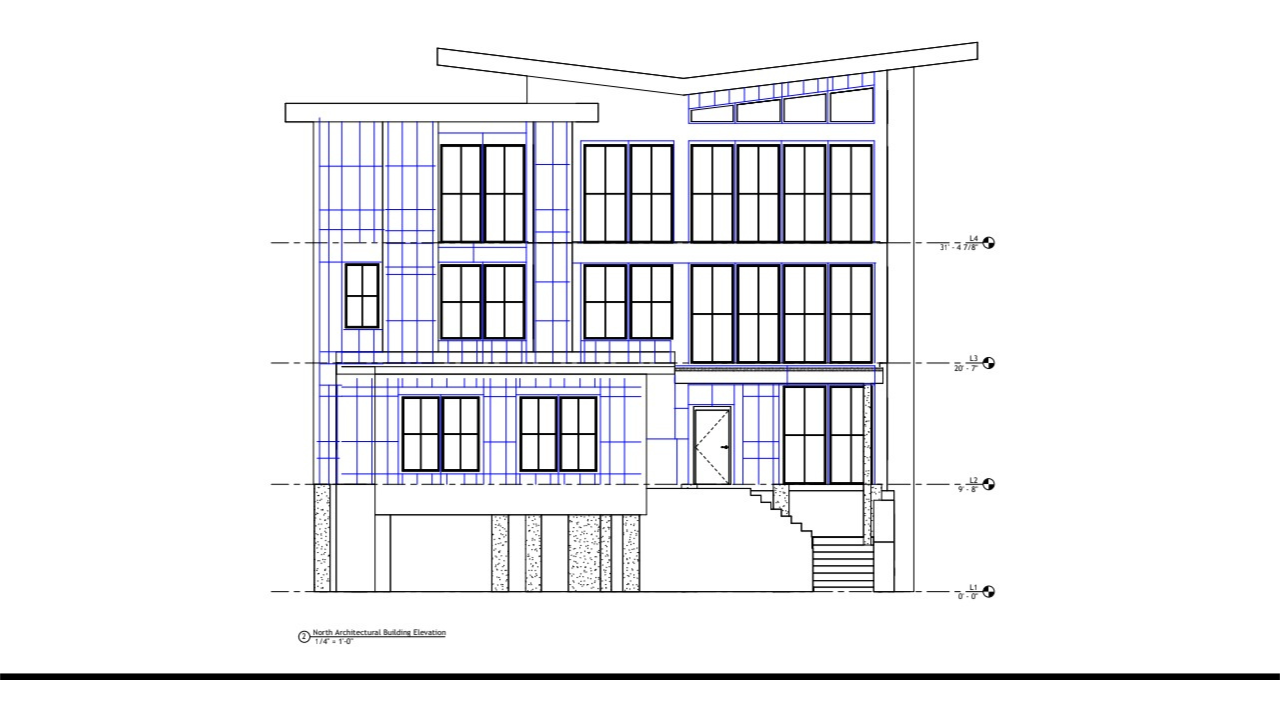
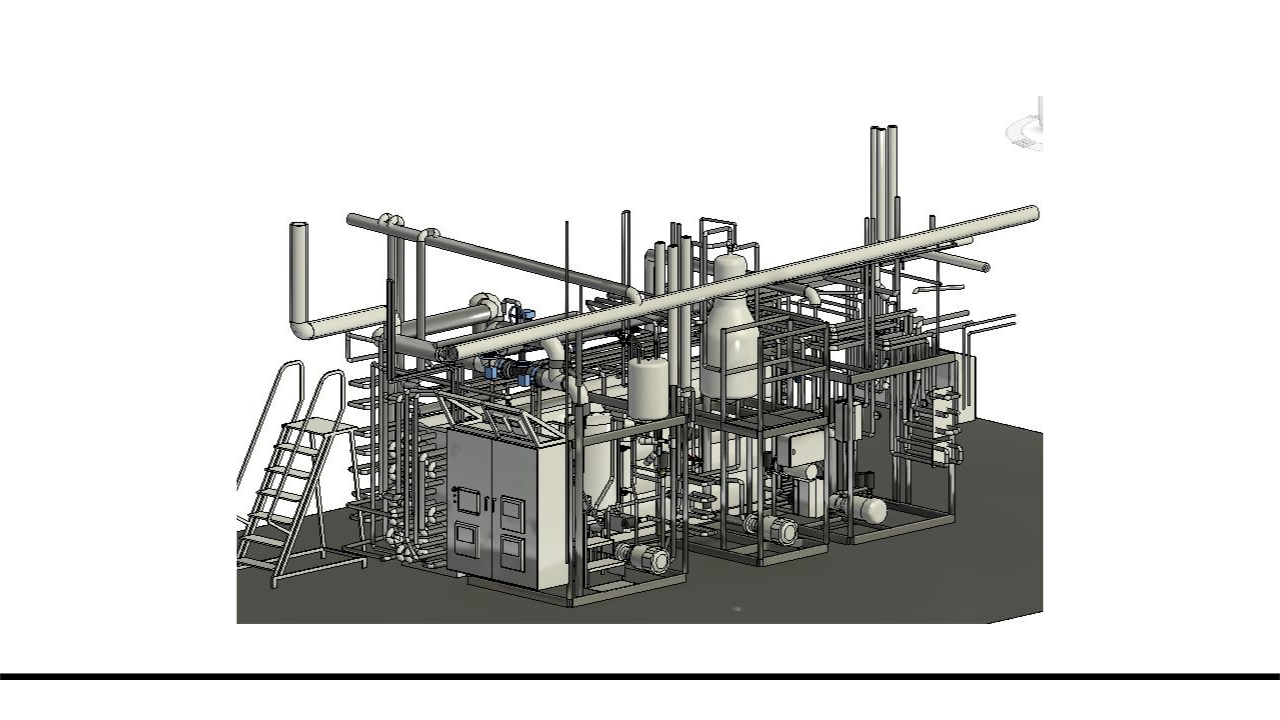
The deliverables behind these images are public. Open the as-built models, then walk the Matterport tour for the visual side. Every one is work we delivered. This is what the money buys.
Cost by deliverable
The single biggest price lever is not the building. It is what you ask for. The same capture supports very different deliverables at very different price points, and the right one is set by your downstream workflow, not by the vendor's hardware. If the raw data formats below are unfamiliar, the plain-English guide to point clouds covers E57, RCP, and what each point actually contains.
| Deliverable | Typical 2026 cost | What you receive |
|---|---|---|
| Matterport / 360 tour | $350 - $2,000 per capture | Visual walkthrough, roughly 20 mm accuracy |
| Point cloud only (small commercial) | $3,000 - $8,000 | Registered raw data, delivered as E57 or RCP |
| 2D as-builts (scan-to-CAD) | Priced below a full BIM model of the same building | DWG floor plans, elevations, sections |
| Scan-to-BIM | $0.10 - $8.00+ per sf; $25,000 - $80,000 for a 50,000 sf office at LOD 300 | Revit model at a contracted LOD |
| FF/FL floor flatness report | Scope-priced, commissioned with a slab scan | Flatness and levelness analysis per ASTM E1155 |
The tour and the survey-grade scan are not interchangeable, and the accuracy gap between them is roughly 10x. The Matterport vs LiDAR comparison walks the same room captured both ways.
Why two quotes for the same building differ 80x
A $5,000 quote and a $50,000 quote for the same address are almost never quotes for the same thing. One prices a point cloud, the other a full Revit model. One assumes LOD 200, the other LOD 350. One covers architectural scope, the other adds structure and MEP. The label 3D scan hides those differences. The line items reveal them. The most common version of this problem: an owner specs LOD 300 by default, accepts the lower bid, then reports that the model does not show MEP details. That detail level is LOD 350 territory, and it was never in the cheap quote's scope. Before comparing bids, force both onto the same axes: deliverable, LOD, trades included, accuracy standard. Two quotes that finally describe the same scope tend to land surprisingly close together.
Regional variation
Geography shows up in one line item above all: mobilization. An operator based an hour from your site quotes travel as a rounding error. An operator flying in with cases of equipment quotes airfare, lodging, and lost field days. Dense metros have more operators and tighter mobilization costs. Remote sites carry the full weight of getting a scanner there. The capture, registration, and modeling labor itself prices similarly across the country, because the deliverable standards it is checked against, USIBD LOA for accuracy and BIMForum LOD for model development, are national. This is the reason we work from the capture capacity closest to your site instead of dispatching from one home base. Keeping the crew near the work keeps the mobilization line honest, and it is stated plainly here because most quotes never explain it.
When scanning pays for itself, and when it does not
One site visit replaces weeks of hand measuring. That is the core economics of laser scanning: renovation and retrofit design built on a verified as-built instead of assumptions, with no return trips and no missed dimensions. The payback shows up hardest on complex work, where cheap capture is expensive. Buyers who pick a $0.40 per square foot quote against a $4.00 per square foot quote for MEP-dense work routinely eat rework costs that exceed the savings. Scanning does not pay everywhere. When the need is visual, a $350 to $2,000 walkthrough tour serves better than a $30,000 scan-to-BIM job, and a single small room your team measures by hand in an hour needs no scanner at all. This site is on the buyer's side of that call. The right answer is sometimes the cheaper deliverable, and this guide says so in print.
Questions buyers actually ask
What does laser scanning cost per square foot?
Published scan-to-BIM rates span $0.10 to $8.00 and up per square foot. The range is real: simple warehouses sit at the bottom, MEP-dense mechanical rooms at the top.
Why did I get a $5,000 quote and a $50,000 quote for the same building?
Different deliverables, different LOD, different scope assumptions. The label 3D scan hides those differences. The line items reveal them.
Is the cheapest quote a better deal?
Often not. Buyers who pick a $0.40 per square foot quote against a $4.00 per square foot quote for complex work routinely eat rework costs that exceed the savings.
Is Matterport cheaper than laser scanning?
Yes: $350 to $2,000 per capture versus $3,000 to $8,000 and up for survey-grade point clouds. It delivers roughly 20 mm accuracy, not the plus or minus 2 to 4 mm that engineering work requires.
What should a quote itemize?
Mobilization, field capture hours, registration, deliverable production (modeling or drafting), and QA. If a quote is one number with no breakdown, ask for one.
Get a real estimate
Tell us the building type, the square footage, and what the data feeds. We translate that into the deliverable spec your workflow actually needs and a real number. The estimate is the plan, in writing.
Get a quote