Structured light
A light pattern is projected over the object and its distortion is read back. Fast and detailed for small to medium parts with fine surface features.
Objects and parts
This is the objects side. Anything physical that is not a building. A boat. A car. An engine part. A propeller. A sculpture. A mold. Size does not matter here. A hundred-foot vessel is an object the same way a fishing lure is.
The through-line is simple. When the original drawing is gone, or never existed, the object itself becomes the drawing. We scan the physical part and hand back an exact digital version you can measure, remake, inspect, or keep forever.
Real object work
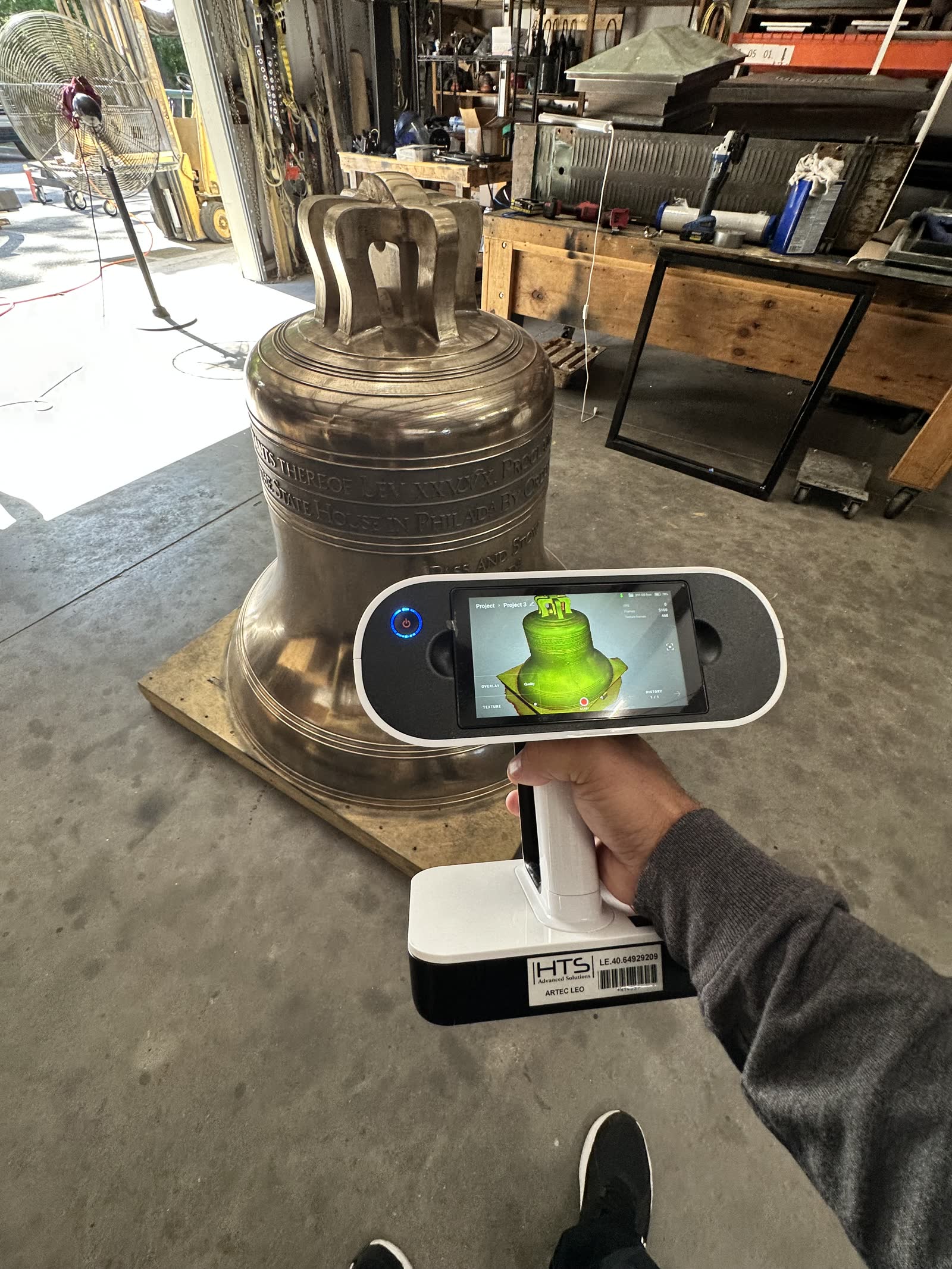
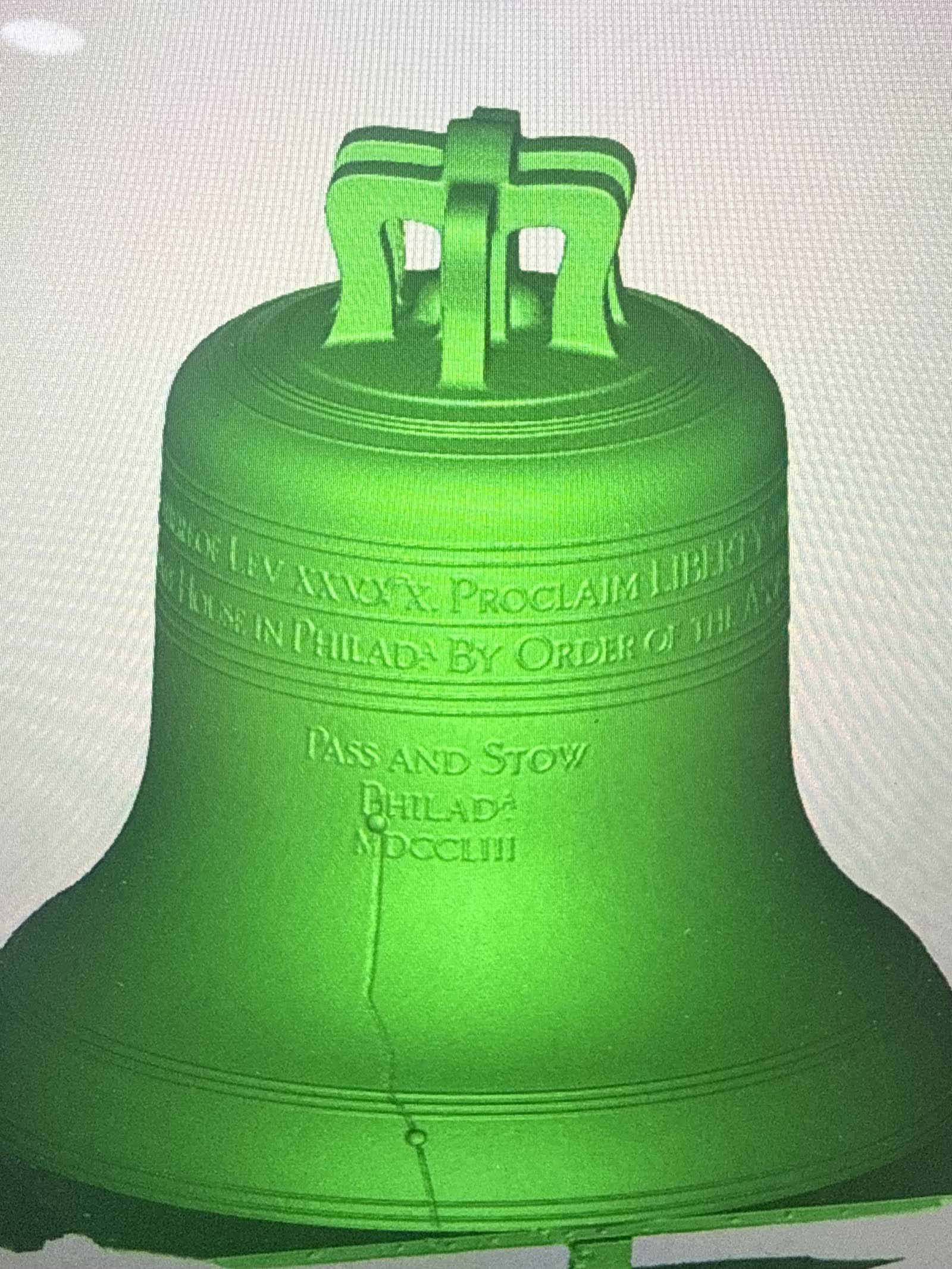
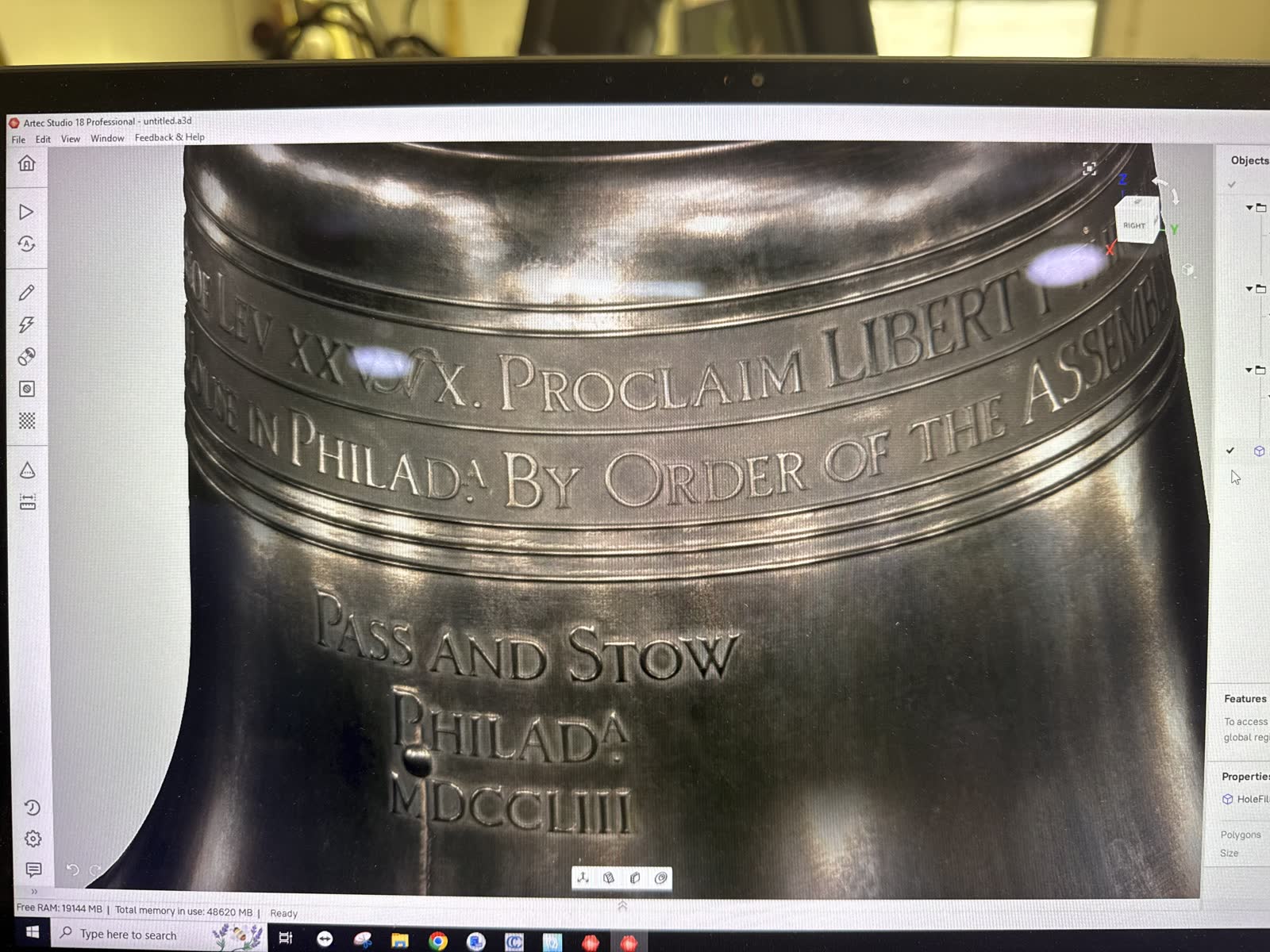
A cast bell the size of the original, captured with a handheld structured light scanner. The inscription and the famous crack line read straight out of the scan data. If we can hold a national icon in a point cloud, your part is not too complex.
What counts as an object
If it is physical and it is not a building, it belongs here. These are the kinds of things people send us.
Hulls, decks, and running gear.
Bodies, panels, and components.
Castings, housings, and assemblies.
Brackets, fittings, and hardware.
Statues, reliefs, and carvings.
Tooling, patterns, and forms.
If your object is not in that list, that is normal. The list is a sample, not the limit.
What it is
Most people think 3D scanning is only for buildings. It is not. The same field measures one object down to its surface, its worn edges, and the changes nobody ever wrote down. Which tool fits depends on the object, and that call is ours to make, never yours.
A light pattern is projected over the object and its distortion is read back. Fast and detailed for small to medium parts with fine surface features.
Laser measurement at close range for larger objects. The choice when a boat hull, a vehicle, or a big casting has to be captured whole and true to scale.
A model built from many overlapping photographs. Well suited to textured surfaces and shapes a scanner cannot easily reach.
Already know the method you want? We run it. If you would rather start with the object and the goal, we match the capture to the job on the first call.
What you get back
We produce the format your downstream work actually needs, not a raw file you have to figure out. A scan gives you a mesh, not an editable CAD file by default. The mesh versus CAD guide explains the difference and what STL, OBJ, STEP, and IGES are each for.
A clean, sealed digital twin of the object, accurate to the surface. The base deliverable everything else is built from, and what you send to a 3D printer or a mill.
Editable, parametric CAD and solid models an engineer can open, change, and send straight to fabrication or machining. STEP, IGES, and native formats.
A measured comparison of the real part against a reference model, showing where it deviates and by how much. Proof of the geometry, not guesswork.
Dimensioned 2D drawings pulled from the scan, so a part with no paperwork can be quoted, remanufactured, or documented like it always had a spec.
Real reasons people call
A builder wants to refine a hull or reproduce it exactly. We scan the whole shape and hand back a model the yard can work from, so the next hull matches the one that already runs right. See the boat and marine scanning guide for how hull capture works.
A part breaks and the manufacturer is gone. We scan the old one, worn edges and all, and produce the CAD and drawings a shop needs to remanufacture it.
A propeller has to be measured and documented before it can be repaired or matched. We capture the true geometry and give the shop an exact reference to work against.
A new component has to land on an existing part exactly. We scan what is there so the fabricator builds to real geometry. This is the same problem our fabricator work solves for stairs and rails.
A one-of-a-kind piece needs to be reproduced, resized, or preserved. We capture it precisely so a copy can be made, or a permanent digital record kept, without ever touching the original again.
A mold was cut by hand and the final shape lives only in the tool. We scan it into a model so it can be duplicated, modified, or archived before it wears out or walks off the shop floor.
The sizes run from a fishing lure to a hundred-foot vessel. Small does not mean too small. Large does not mean too large. If your object is not in that list, that is normal. The list is a sample, not the limit.
How it works
Bring a full spec or bring a photo and an idea. Either one starts the job. Here is the whole path.
Step 1
A photo of the object. A sentence about what you want to do with it. Whether you have any existing drawing or none at all. That is enough for us to understand the job.
Step 2
We choose the method that fits the object and measure it as it truly is. Small parts and delicate pieces can come to us. Large objects and vessels get captured where they sit.
Step 3
The deliverable your work needs. A watertight mesh, a solid CAD model, an inspection report, reverse-engineered drawings, or an archive file. We produce the right output, not just a raw scan.
Step 4
STEP, STL, IGES, and OBJ, plus native CAD where you need it. You tell us where the file has to go and we hand it over in the format that opens there.
See the work
We are assembling a set of real object deliverables you can open and inspect the same way you can on the building side. Until those are posted, the fastest way to see whether we can capture your part is to send us a photo of it. We will tell you straight.
Send us a photo of your object and we will tell you straight.
Pricing
A lure and a vessel are not the same job, so object pricing is not a fixed rate. It depends on the size, the surface, the accuracy the work calls for, and the deliverable you need at the end. The object scanning cost guide breaks down what drives the number and why the scan is cheap while the CAD rebuild is not. Tell us the object and what you want to do with it, and we get you a real number. No configurator, no self-diagnosis.
Tell us the object and what you want to do with it, and we get you a real number.
Go deeper
Four plain-English guides to object work, from what a scan actually hands you to what it costs.
A scan gives you a mesh, not an editable CAD file. The honest difference, and what STL, OBJ, STEP, and IGES are each for.
Structured light, metrology laser, and photogrammetry compared, plus what accuracy really means and the full pipeline.
Hull capture for refit and replication, why a hull never matches its drawings, and custom fit for towers, canvas, and trailers.
The real price drivers, why the scan is cheap and the CAD rebuild is not, and what information gets you a fast, real number.
Want the full method breakdown? Read the object and part scanning service page. Scanning a building or a site instead? See the buildings, spaces, and land side.
Send a photo and a sentence about what you want to do with it. We identify the right method, produce the deliverable your work needs, and get you a quote.