Learn object scanning
Boat and Marine 3D Scanning: Hulls, Refit, and Custom Fit
By the ScanningAndModeling team · Last updated July 16, 2026
3D scanning captures a boat exactly as it sits today, hull, deck, interior, and machinery, as measured geometry you can build from. That matters in marine work more than almost anywhere else, because a real hull never matches its original drawings. Boats flex, they were built by hand, they have been repaired and modified, and the paper lines plan is a starting point, not the truth. A scan gives you the truth: the actual shape, to the millimeter, that every refit part, replacement, and custom fabrication has to mate with. This guide covers hull capture, fairing and lofting from scan data, scanning the spaces below and behind, custom-fit work like towers and canvas, and what you actually receive, from a trailerable center console to shipyard scale.
Marine buyers are some of the most underserved in reality capture. Owners of larger hulls routinely go looking and cannot find a vendor who can handle the size. The whole point of a nationwide scanning service is that a thirty-six-foot hull is not too big and a fishing lure is not too small. Size is a logistics question, not a capability wall.
Why scan a boat instead of using the builder's drawings?
Because the drawings describe the boat that was designed, and the scan describes the boat that exists. Those are not the same object. A hull is laid up in a mold by hand, then it flexes under its own weight and use, gets blister repairs and stringer work, has hardware bedded and rebedded, and picks up a lifetime of small deviations from its lines plan. When you need to build something that fits, a hardtop, a swim platform, a new tank, a replacement panel, a bracket, the question is never what the drawings say. It is where the surfaces physically are now.
A laser scan answers that directly. It captures every hull contour, structural element, and system detail into an accurate digital record of the vessel as it is, a faithful digital twin that drives faster turnaround and fewer surprises in refit and new-build engineering. The scan replaces guesswork with measured geometry for maintenance, refit, and reverse engineering..
How is a hull captured?
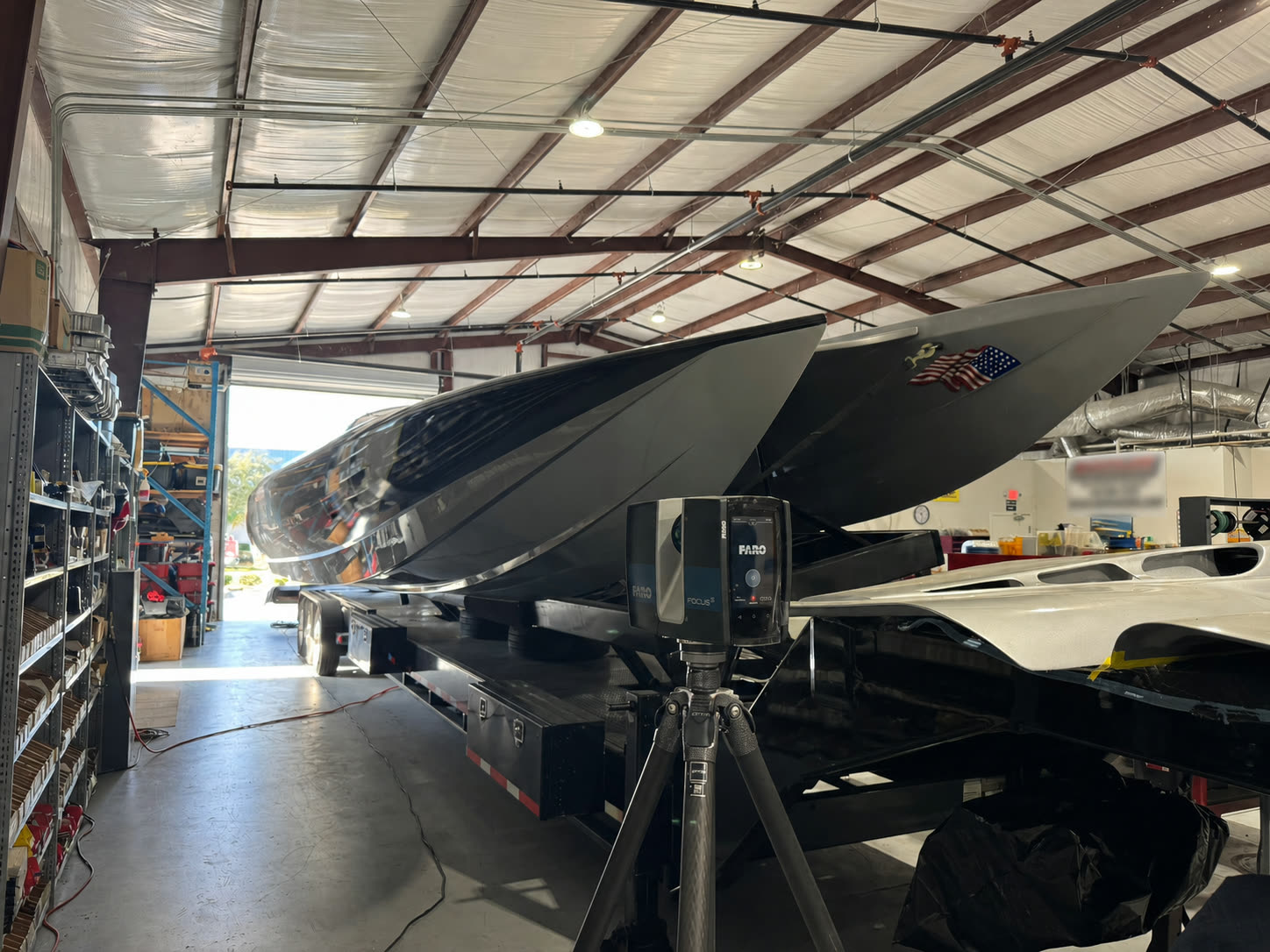
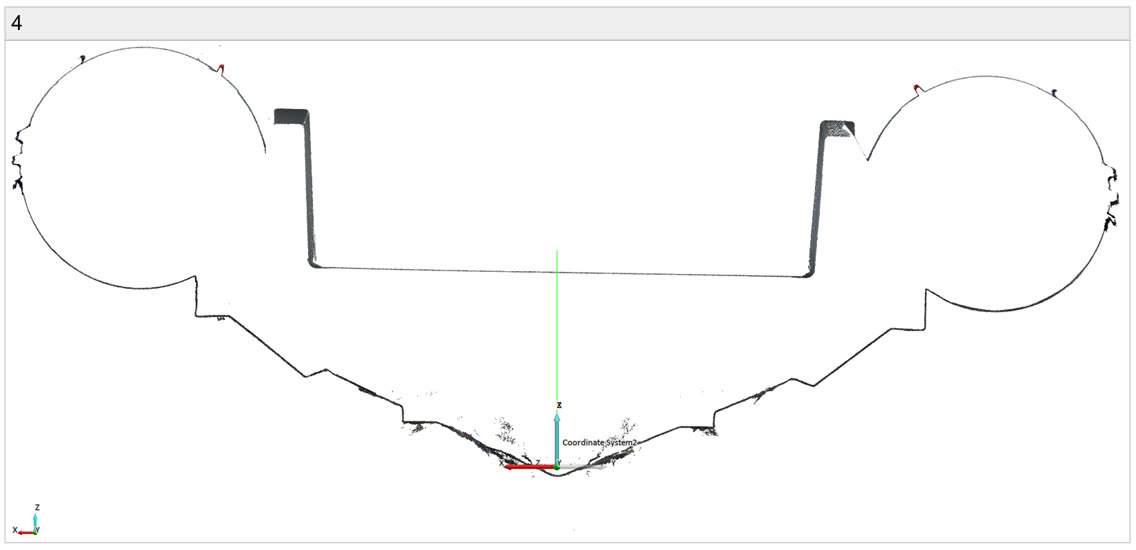
A hull is a large, continuous, organic surface, which makes it a different job from a machined part. We capture it on site with portable equipment, typically blending laser scanning for accurate form with photogrammetry for detail and coverage, working around the boat on its stands or trailer so the full underbody, topsides, transom, and deck are all seen. Coverage is the whole game: a surface the scanner never saw cannot appear in the model, so the capture is planned to leave no gap in the areas the deliverable needs. On the water or on the hard, the individual scan positions are then registered into one measured point cloud of the whole vessel.
The payoff is speed against manual methods. Capturing a cockpit or a run of decking by scanner takes on the order of a couple of hours where hand measurement would take most of a day, and the result is millimeter-accurate over the whole form rather than a handful of hand-taken offsets. Marine scanning providers report the same order-of-magnitude time savings on hull and deck capture..
What are fairing and lofting, and how does scan data feed them?
These are the two classic naval-architecture steps that scan data transforms.
- Lofting is the process of developing the true, full-size shape of a hull from its defining curves, historically drawn out full scale on a loft floor. From a scan, the hull's stations, waterlines, and buttocks are extracted directly from measured geometry instead of being drawn from a lines table, so the lofted shape reflects the real boat.
- Fairing is smoothing those curves so the surface flows without bumps or flat spots, the way a hull must to perform and to look right. Scan data gives the fairing process a dense, accurate starting surface: instead of fairing to an idealized drawing, the naval architect fairs the actual measured hull, keeping the model true to what floats.
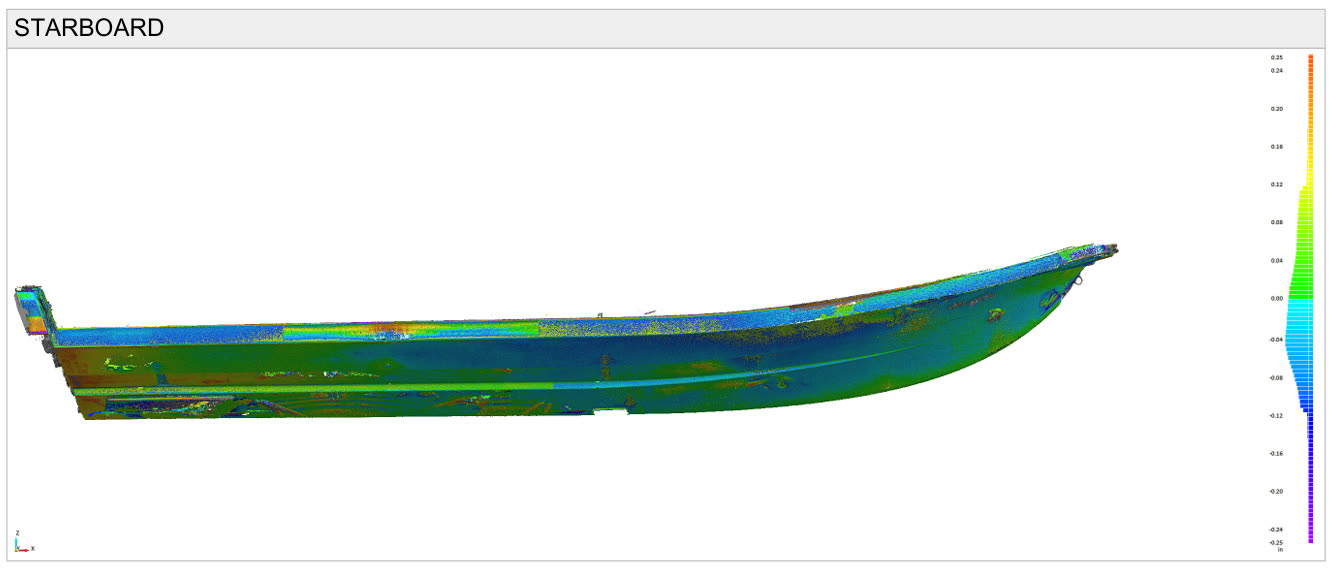
From the faired, lofted surface you can drive real engineering: hydrostatics, stability work, a new deck or interior that mates to the real sheer line, or reverse engineering the hull design itself. Marine and offshore providers use point-cloud data exactly this way, to build conversion and retrofit plans and to reverse engineer hull and structure, as described by Albion Marine. The scan can also feed flaw analysis and computational fluid dynamics, because once the true hull form is digital, every downstream analysis inherits its accuracy.
Can you scan tanks, engine rooms, and interiors?
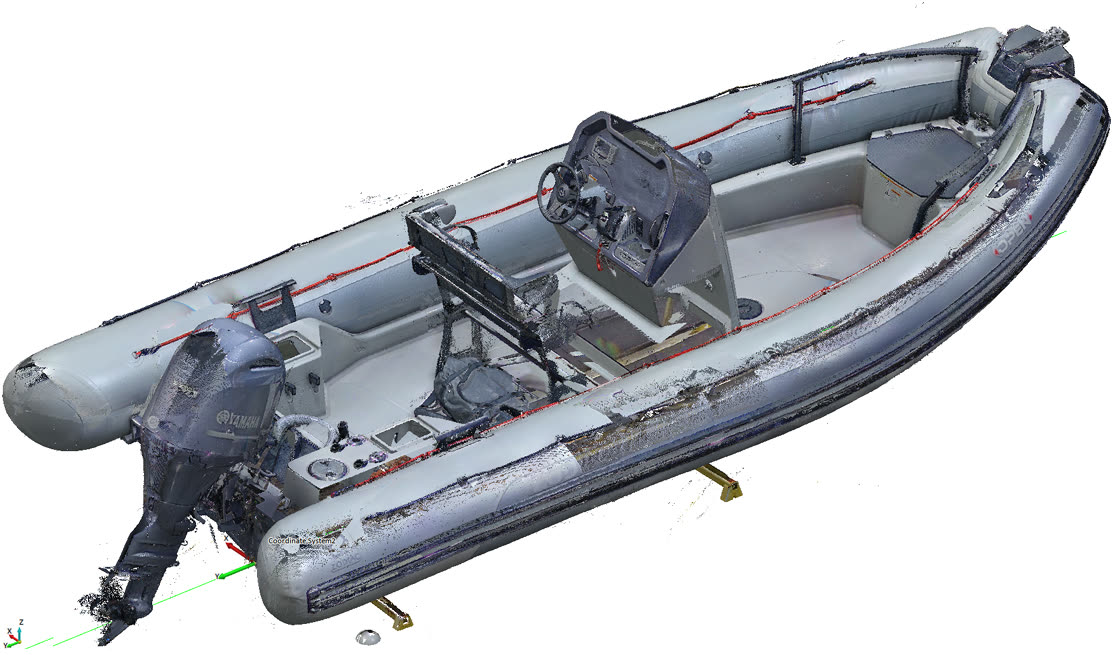
Yes, and it is often where scanning saves the most pain, because these are the spaces where nothing fits and no drawing is trustworthy. An engine room is a dense tangle of machinery, piping, wiring, and structure, and any new component, a genset, a tank, a larger engine, a piece of equipment, has to thread through it. Scanning the space produces a measured 3D record you can design against on a screen, checking that the new part fits and routes before anything is fabricated or cut. The same is true of fuel and water tanks built to odd shapes to fill available volume: scan the void and the replacement tank is built to the actual space, not to a guess.
Interiors, cabins, heads, galleys, helm stations, scan the same way, giving you accurate geometry for refit joinery, new panels, and equipment installs that have to land on real, out-of-square surfaces. The principle is the marine version of the whole objects thesis: capture the reality once, and every part that has to mate with it is designed against measured truth instead of a tape measure and hope.
How does scanning make custom-fit marine parts?
This is where hull scanning pays off for a huge range of owners and fabricators, because a custom part is only as good as the surface it bolts to. When the mating surface is a curved, hand-built, out-of-square boat, a scan is the template that makes the part fit the first time.
| Custom-fit job | What the scan provides |
|---|---|
| Towers, hardtops, and T-tops | The real deck and gunwale geometry the base must land on, so legs and pads mate cleanly |
| Canvas, enclosures, and covers | Accurate frame and opening dimensions for patterns that fit without on-boat trial fitting |
| Swim platforms and bracket extensions | The true transom shape and angle to build a bolt-on that seats flush |
| Bumpers, rub rails, and trim | The real hull curve so extruded or fabricated parts follow the sheer |
| Replacement hatches, panels, and hardware mounts | The exact opening and surrounding surface for a drop-in fit |
Instead of building a part, hauling it to the boat, trimming, and rebuilding, the fabricator designs against the scan and builds it right once. That is the same fit-the-first-time value that reverse engineering brings to any object, applied to a boat that never matched a drawing to begin with.
What about trailers and towing fit?
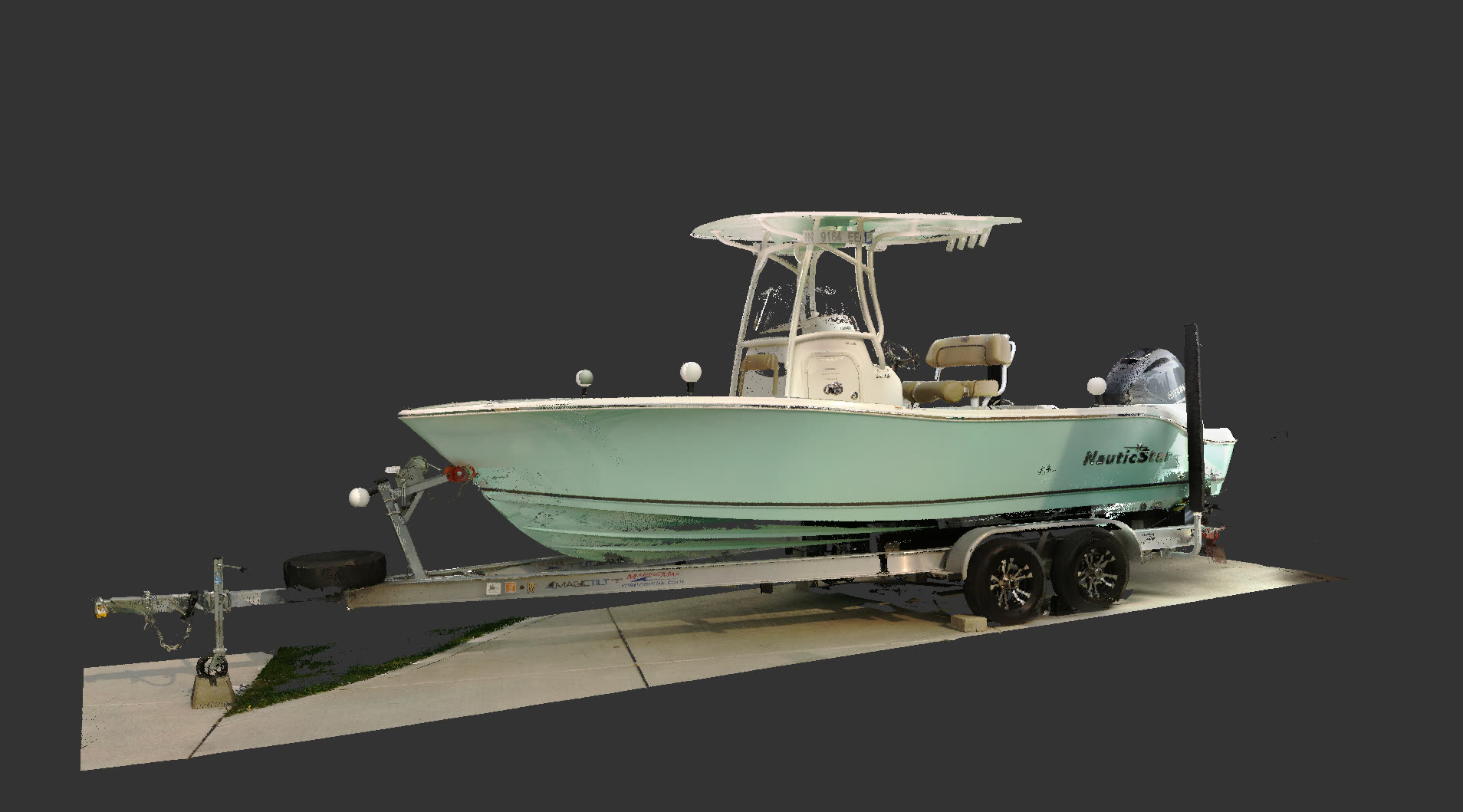
A trailer has to cradle a specific hull, and a hull that was scanned is a hull a trailer can be built or adjusted to fit exactly, bunk positions, roller placement, and support points set to where the boat actually carries its load rather than to a generic template. The same scan that serves the tower fabricator and the canvas shop gives the trailer builder the real underbody shape. Capture the boat once, and the whole ecosystem of parts that touch it, on the water and on the road, is designed against one measured source.
Can you replicate a hull or reproduce a discontinued marine part?
Yes. Hull replication is one of the strongest cases for scanning, because there is usually no usable drawing to work from. Scan the existing hull, reverse engineer the form into a CAD surface, and you have the geometry to build a plug, tool a new mold, or reproduce the shape, whether the goal is a sister boat, a repaired section, or a new mold for a proven hull. The same is true for the endless discontinued marine hardware, brackets, fittings, trim pieces, and mounts on older boats where the manufacturer is long gone. Scan the surviving part, rebuild it as CAD, and reproduce it by CNC, casting, or 3D printing. The mesh-versus-CAD distinction matters here exactly as it does on land: a printable mesh copies the shape, while a parametric CAD rebuild lets a shop machine or mold it, a difference we cover in full in mesh vs CAD, what a scan actually gives you.
What do you actually deliver for a marine job?
You receive the deliverable your project needs, in the format your naval architect, fabricator, or yard works in.
| Deliverable | What it is | Who uses it |
|---|---|---|
| Registered point cloud | The measured record of the whole vessel as scanned | Anyone who wants to work directly from the raw geometry |
| Hull surface model | The faired, lofted hull as a CAD surface | Naval architects, hull replication, hydrostatics and CFD |
| Sections and waterlines | Stations, waterlines, and buttocks pulled from the scan | Refit engineering, lines documentation, structural work |
| Parametric CAD parts | Reverse-engineered components as editable solids (STEP) | Fabricators building towers, tanks, brackets, replacement parts |
| Fit and clearance model | Measured geometry of a space for design-against-reality | Engine-room and interior refits, equipment installs |
We scope which of these you need from the goal, not from jargon. Tell us it is a tower, a repower, a new tank, a hull to replicate, or a trailer to fit, and we translate that into the capture plan and the file you receive.
Trailerable to shipyard scale: is my boat too big or too small?
Neither. The method scales with the vessel. A trailerable center console is captured in an afternoon on its trailer. A larger sport-fisher or cruiser in the thirty-to-fifty-foot range is captured on the hard with more scanner positions and drone or elevated capture for the topsides and superstructure. Full vessels up to a hundred feet are a coordinated on-site capture. The buyers who cannot find help are usually the ones in the middle, the thirty-something-foot hull owners who hear their boat is too big for a small scanner and too niche for a big metrology shop. That gap is exactly what a nationwide service closes. If it floats or trailers, we can scan it.
Questions boat owners actually ask
Why can't I just use my boat's original drawings?
Because a real hull never matches its lines plan. Boats are hand-built, they flex, and they get repaired and modified over their lives. A scan captures the boat that actually exists, which is the only geometry a custom part or refit can reliably mate with.
Can you scan a 32 to 36 foot hull?
Yes. Mid-size hulls are exactly the boats owners struggle to find a vendor for, too big for a small handheld scanner, too niche for a large metrology shop. We capture them on site with portable equipment, at millimeter accuracy over the whole form.
Can you reverse engineer a hull to build a mold or a sister boat?
Yes. We scan the existing hull and reverse engineer the form into a CAD surface you can use to build a plug, tool a new mold, or reproduce the shape. There is usually no usable original drawing, which is exactly why the scan is the source.
Can you scan an engine room or a tank space?
Yes, and it is often where scanning saves the most. We capture the crowded space as measured geometry so a new engine, genset, or tank can be designed to fit and route before anything is cut or fabricated.
Do you scan on the water or out of the water?
Out of the water is ideal for full hull capture, on stands or a trailer, so the underbody and topsides are all reachable. Interiors, decks, and spaces can be captured in the water. We plan the capture around how and where your boat is accessible.
About the author
The ScanningAndModeling team
The ScanningAndModeling team writes these guides from the field: the people who scan, model, and reverse engineer physical objects across the country every week. Plain-English answers with real methods and real deliverables, so you can spec a project without guessing.