3D Scanning a Sculpture, Statue, or Artwork
By the ScanningAndModeling team · Last updated July 19, 2026
Scanning a sculpture, a statue, a relief, or a piece of fine art turns a physical object into a precise digital record you can archive, study, reproduce, or enlarge. Museums, artists, foundries, and estates all want the same thing: an exact three-dimensional copy that survives the original and can be worked from without touching it. This guide covers the two methods that do it, structured light and photogrammetry, when each one fits, and roughly what the work costs.
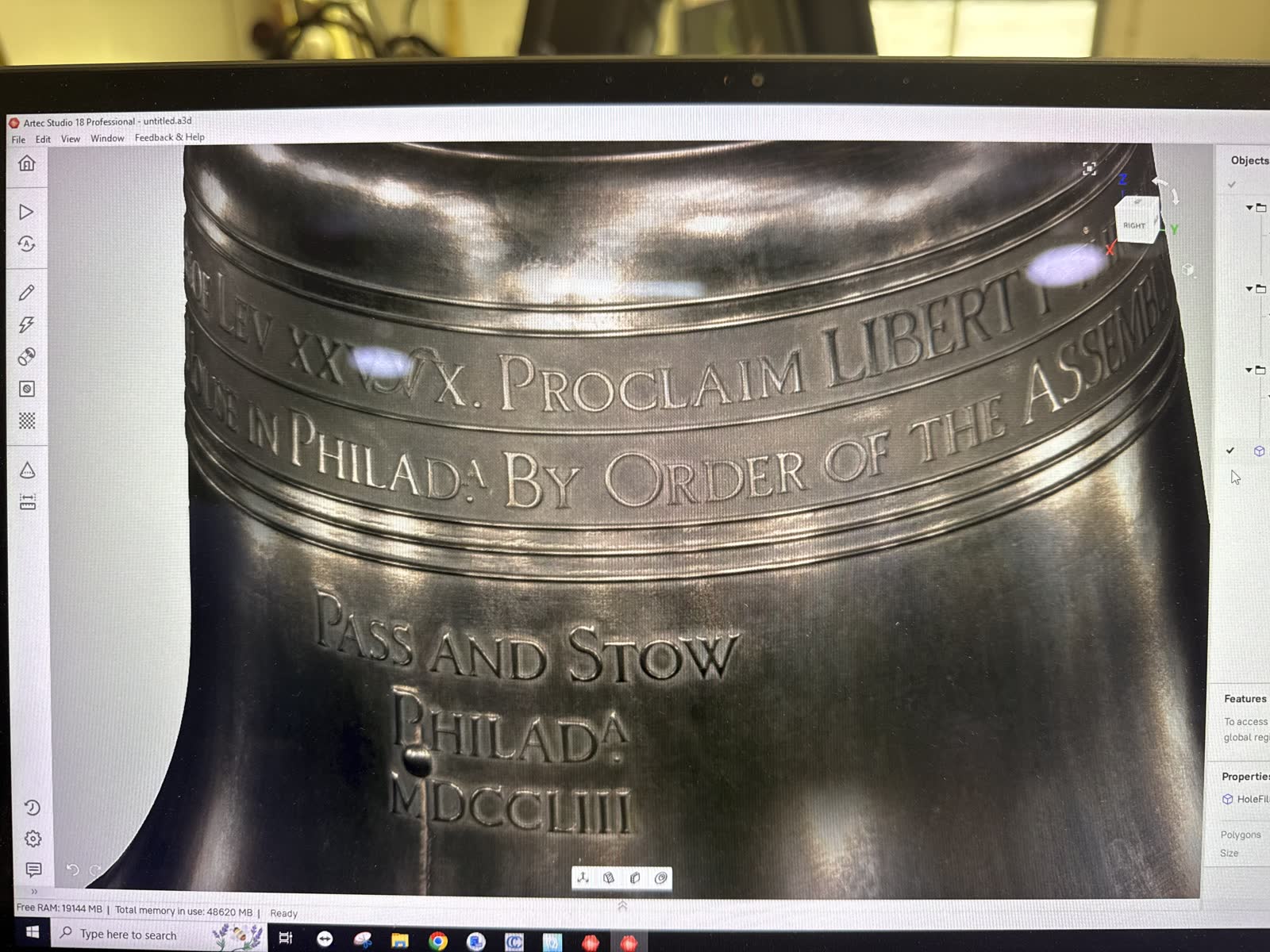
Why digitize a physical piece
A scan is insurance and a tool at once. It preserves the exact geometry of a piece against damage, loss, or decay, so a conservator has a measured record to restore against. It lets a foundry enlarge a maquette to monument scale or reproduce an edition without recarving. It gives a museum an object for study, exhibition, and online access without handling the fragile original. And it gives an artist a way to iterate digitally, then bring the result back to the physical world through CNC or casting.
Structured light or photogrammetry, honestly
Two methods dominate art and sculpture work, and they suit different pieces.
Structured light scanning projects a pattern of light onto the surface and reads how it deforms with cameras, calculating the distance to every point in view. It captures fine geometric detail, tool marks, carving, surface texture, at high resolution, and it is the method of choice when the shape itself is the value. It needs controlled conditions and struggles with dark, glossy, or transparent surfaces without preparation.
Photogrammetry builds the model from hundreds of overlapping photographs. It is the most accessible method, workable with a high-resolution camera and, at the low end, even a smartphone, and it excels at capturing color and full-surface appearance. It is the practical choice for large pieces, on-location work, and when texture and color matter as much as geometry. Its limit is that fine geometric precision depends heavily on the capture setup and lighting.
| Method | Best for | Watch out for |
|---|---|---|
| Structured light | Fine geometric detail, tool marks, exact form | Dark, glossy, transparent surfaces; controlled setting |
| Photogrammetry | Color and texture, large pieces, on-location capture | Precision depends on lighting and capture discipline |
The choice of method follows the piece and the purpose. The same object-capture principles apply across art and industrial work, laid out in how object 3D scanning works.
What you get
A high-resolution mesh, usually as OBJ or STL, is the core deliverable, often with a color texture map when appearance matters. From there the model can go to 3D printing, CNC carving or milling, or casting through a printed pattern, and it can be scaled up or down for reproduction. For an archival record, the mesh plus the color texture is the object you keep. For reproduction, the mesh is the master a machine works from.
What it costs
Costs scale with size, detail, and purpose. Published references put small single-artifact scans in the range of a few hundred dollars, with full exhibits, monuments, and historic-site documentation running into several thousand. On the hardware side, capable handheld structured-light and laser scanners for small pieces sit under about $2,500, and photogrammetry is workable for under a couple thousand dollars in gear, which is why light internal capture is accessible but professional archival and reproduction work is a service. Those are industry reference figures, not our quote. Tell us the piece, the size, and whether you need an archive or a reproduction master and we price it.
Questions people actually ask
Can you scan a piece without touching it?
Yes. Both structured light and photogrammetry are non-contact, which is exactly why they suit fragile and valuable pieces. Nothing touches the surface.
Can you enlarge a small maquette to monument scale?
Yes. A scan is scale-independent, so a maquette can be milled or printed at any size, which is how foundries produce monumental work from a hand-sized original.
Do you capture color, or just shape?
Both are available. Photogrammetry captures color and texture natively; structured light captures geometry and can be paired with photography for a colored result.
Digitize a piece
Tell us about the sculpture, statue, or artwork, its size, its surface, and whether you want an archival record or a reproduction master. We capture it without touching it and hand you the model.
Get a quote